
6. Potash, Magnesium & Sodium – Fertilisers for Grass (1.02M)
pdf 1.02M
6. Potash, Magnesium & Sodium – Fertilisers for Grass
Published December 2023
Introduction
Potash use has historically been linked to fears that so-called “luxury” uptake may cause staggers (hypomagnesaemia) and other mineral disorders. Metabolic problems can be costly but so is sub-optimum use of potash. This leaflet reviews the facts.
Natural mineral content of grass
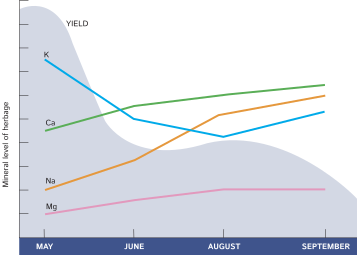
The natural pattern of uptake of minerals such as Potassium (K), Magnesium (Mg), Sodium (Na) and Calcium (Ca) varies during the course of the growing season. The dry matter of young rapidly growing grass, especially in the spring, has a high K content when dry matters are low which declines as the season progresses, whilst the concentration of other minerals increases through the summer.
Nutrient uptake
The application of a correct balance of nitrogen, phosphate, potash and sulphur is required to obtain the optimal yield and quality of low-cost on-farm forage. In addition to their effect on yield, N and K fertilisers influence the mineral content of grass, especially Mg, Na, and Ca. Adequate nitrogen will tend to stimulate the uptake of all minerals but the ease with which plant roots absorb different nutrients varies:
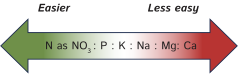
This is in line with the needs of grass, which for optimum growth requires large amounts of potassium and lesser amounts of magnesium and sodium. For animals however, the balance of requirements is for more magnesium and sodium and only modest potassium. An adequate supply and balance of these minerals is important to minimise the risk of metabolic disorders such as hypomagnesaemia (staggers or grass tetany) and milk fever and to ensure fertility.
Potash in perspective
Increasing uptake of one nutrient by the plant may affect the level of others, but it is quite wrong to assume that the application of potash automatically leads to mineral disorders. The effect of potash fertiliser on herbage mineral content will vary widely in different situations. The graph below shows how magnesium and sodium levels in the plant may decrease as a result of potash application. However, this is not always the case and the application of potash may not have any effect on the sodium or magnesium levels.
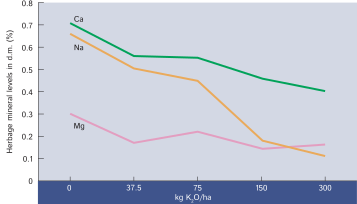
Data from other trials show soil type to be an important factor in these relationships.
| Potash rate applied in March (kg/ha) | ||||||
|---|---|---|---|---|---|---|
| Soil type | 0 | 40 | 80 | 120 | 160 | 200 |
| Clay soil | 0.15 | 0.15 | 0.17 | 0.15 | 0.14 | 0.15 |
| Sandy | 0.21 | 0.15 | 0.14 | 0.14 | 0.13 | 0.13 |
Magnesium levels in grass on sandy soil was progressively reduced by higher spring potash applications, whereas on the clay loam they were unchanged even up to 200 kg/ha K2O.
Any reduction in daily magnesium intake by grazing animals should be avoided. Pasture Mg supplementation to above 2.0% Mg or preferably above 2.5% Mg in DM by use of magnesium-containing fertilisers ensures regular consumption by the whole herd.
Potash, magnesium and sodium relationships
On farms where staggers is a recurring problem, attention should be given to the potassium, magnesium and sodium content of herbage.
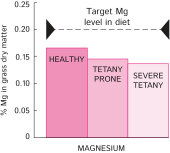
Normal magnesium concentrations in herbage are frequently below the minimum 0.20% suggested for animal diets. Magnesium levels in plants is affected by a large number of factors and whilst the risk of magnesium disorders may increase with lower herbage magnesium, this is not a reliable measure of whether clinical mineral problems will occur in the animal.
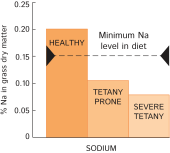
The level of sodium must also be considered. The bar chart above shows that where herbage sodium levels are above the minimum dietary guide of 0.15% Na, the risk of staggers is low, but rises with lower sodium levels.
Nutrient balance
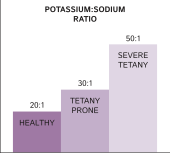
Nutrient balance is important in avoiding mineral disorders and experimental work has shown that there is less risk of staggers when potassium, magnesium and sodium levels in herbage result in K:Na and K:Mg ratios of between 10 and 20:1. The histogram indicates the greater risk of staggers at K:Na ratios greater than 20:1. Field trials and surveys have shown that maintaining a high level of sodium and magnesium in grass will reduce the risk of staggers.
The PDA Technical Note Fertilisers and Hypomagnesaemia: An Historic Exaggeration? written by the late Professor Gordon Hemingway from Glasgow University Veterinary School provides an insight into the link between high nitrogen and potassium fertiliser applications and the incidence of clinical tetany and how this may have been overstated in previous research work.
The place for sodium
Sodium fertilisers will not normally give extra grass yield but they will increase the Na content of grass which will improve the palatability of herbage and may reduce the chance of grass staggers. Studies have found that dry matter intake of herbage containing 0.2‑0.5% Na was increased by 12‑18% when sodium-containing fertiliser was applied, perhaps due to longer times of grazing shorter length material.
Sodium is also associated with higher D values and sugar content of grass. Research from Bangor University indicates that these effects increase milk output and percentage butterfat and may also have a small benefit on somatic cell count. Grass palatability and milk output increase at herbage sodium levels up to 0.5% in the dry matter.
Grazing
Staggers is mainly associated with lush spring growth when magnesium and sodium levels in herbage are low. Large potash application to grazed swards should be avoided at this time. Replacement K dressings should therefore either be made after the spring flush i.e. June onwards, or applied in small more frequent applications. Potash requirements of grazed grass are small because most K is recycled back to the sward in the dung and particularly in the urine.
Staggers can occur at other times in the season when magnesium levels are inherently low, where over-dependence is placed on low dry matter grass and when animals are under other stress such as at calving. Close attention to the mineral nutrition of animals is required at these times and supplementation may be required.
Cut grass
Silage and hay crops remove large quantities of potash from the soil. These must be replaced to maintain soil fertility and protect future yields. Restricted use of potash will seriously reduce hay and silage yield and will not necessarily reduce the incidence of magnesium disorders. So-called “luxury uptake” will not occur if the rate of fertiliser potash applied takes account of:
- the nitrogen rate used (which will affect yield and therefore offtake)
- level of soil K reserves
- use of organic manure
- soil type
Potassium, magnesium & sodium in the animal
Much of the sodium consumed by cattle and sheep is used in the saliva which is secreted into the rumen to maintain a constant pH by neutralising acids formed by bacteria in the rumen liquor. If the sodium content of forage is too low, the animal automatically substitutes potassium for sodium as an alternative buffer in the saliva and diverts sodium to maintain blood Na level as first priority.
The resulting increase in K:Na ratio in the rumen leads to reduced resorption of Mg through the rumen wall into the blood – hence placing the animal at risk of hypomagnesaemia. However, it is only in extreme cases that a low blood level of magnesium occurs (less than 1.8 mg/100 ml of blood in cows) and the consequences of the condition (reduced milk yield and even death) may arise without ever detecting low blood Mg.
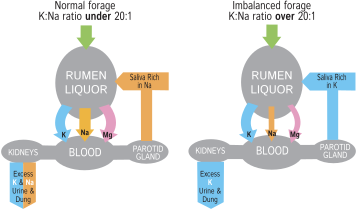
Fertilise to balance K, Mg, Na
The sodium and magnesium content of grassland can be improved by using sodium and magnesium fertilisers to balance the levels of K required for grass production. Extra minerals may be required for high yielding dairy cows and lactating sheep. Feed analysis should be used to confirm supplements required.
Slurry
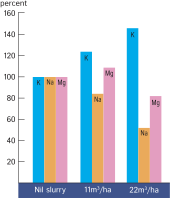
Slurry is a valuable source of minerals, containing a little sodium, some magnesium, and a lot of potash. Modest applications of slurry may increase K and Mg levels in herbage. With larger applications however, the high concentrations of potassium tend to depress both Na and Mg levels. The nutrient contribution of slurry should be taken into account when deciding fertiliser policy. In particular, spring potash dressings should be adjusted when slurry has been applied over winter to avoid excess levels of K being available to the grass in the spring.
Good farming practice
1 Soil analysis
Soil sample every 4-5 years to check on fertility status and trends.
TARGET INDEX 2 FOR P, K & Mg
2 Herbage analysis
Where mineral disorders are a problem take herbage samples when grass is growing actively (e.g. May) to check on K, Mg and Na status.
| Potassium | Magnesium | Sodium | |
|---|---|---|---|
| Optimum | 1.75-3% | > 0.2% | 0.15-0.5% Added benefits to palatability |
| High | > 3% Review timing & quantity Check K:Mg & K:Na ratio | ||
| Low | < 1.75% Check amount of K applied Review manuring policy | < 0.2% Consider applying Mg K:Mg > 20:1 Apply Mg to reduce ratio | < 0.15% Consider applying Na K:Na > 20:1 Apply Na to reduce ratio |
Potash
See PDA leaflet 14 Potash for Grassland and the PDA P&K Nutrient Calculator for detailed recommendations.
Recommended rates of potash for grass which is only grazed are 60 kg/ha and 30 kg/ha of K2O for soil index 0 and 1 respectively. For soils with higher soil fertility levels no potash is required.
Very large quantities of potash are removed in grass silage which must be replaced to maintain soil fertility and yield potential. The following is a guide to typical potash offtakes from multi-cut silage systems.
| Total annual fresh yield (25% DM) | Potash offtake (kg K2O/ha) |
|---|---|
| 1 cut system (23 t/ha) | 140 |
| 2 cut system (38 t/ha) | 230 |
| 3 cut system (47 t/ha) | 280 |
| 4 cut system (54 t/ha) | 320 |
| These offtake values are based on herbage or forage concentrations of 2.0% potassium (K) (on a DM basis). Large datasets of forage analyses show the five-year average (2012–2016) concentrations are higher than this at 2.75% K. Offtake values should be adjusted based on actual figures from analyses. | |
Timing of application
Grazing
Avoid applying potash between March and June except as small dressings of about 10 kg K2O/ha.
Cutting
Apply up to 80-90 kg K2O/ha for each cut according to soil analysis. Make allowance for potash contribution of slurry or manure used. Where larger amounts of potash are required to improve soil reserves additional potash should be applied in the
autumn/winter.
Magnesium
Low soil magnesium levels will affect grass yield as well as mineral balance in the animal. Apply 50-100 kg/ha MgO every three to four years at Mg index 0. Yield response is less certain at index 1 but magnesium application is justified in terms of insurance for grass yield and mineral balance for the animal, to maintain a soil magnesium index of 2.
Where lime is required and Mg levels are 0 and 1, use magnesian limestone as the most cost-effective magnesium source. Where pH is satisfactory, specific magnesium fertilisers should be used for soil improvement. Use water soluble forms of magnesium where rapid plant uptake is required.
Where potassium and magnesium are required, products including polyhalite may be a suitable option.
Sodium
Sodium is very soluble and is rapidly taken up by plants but levels cannot be built up on a long-term basis as Na is relatively mobile in the soil compared with other cations.
To improve herbage mineral balance, apply up to 140 kg/ha Na2O as an early spring dressing. A split application may be preferable at higher rates.
To improve pasture palatability, apply regular dressings of about 10 kg/ha Na2O through the season.
Forage analysis
Herbage or forage analysis can be useful to assess nutrient requirements and balances.
Magnesium (Mg) deficiency is indicated if the Mg concentration is below 0.20% (dry matter basis) or the K:Mg ratio is above 20:1
Sodium (Na) deficiency is indicated if the Na concentration is below 0.15% (dry matter basis) or the K:Na ratio is above 20:1
Herbage or forage analysis is a useful indicator of the need for additional magnesium and for assessing the risk of hypomagnesaemia. Maintain magnesium concentrations above 0.20% (dry matter basis) and ensure the K:Mg ratio does not exceed 20:1.
The K:Na and K:Mg ratios are key indicators of the nutritional quality of forage and reducing the risk of tetany.
Magnesium & sodium content of a range of fertilisers
A range of NPK products are available containing magnesium and sodium for use in grassland.
Nutrient description
Levels of potassium, sodium and magnesium as analysed in soil or herbage are expressed in elemental terms i.e. K, Na, Mg.
Nutrient content of fertilisers and application rates of these nutrients to grass are expressed in the oxide form i.e. K2O, Na2O, MgO.