What is Potash?
In agriculture and horticulture potash is the common term for nutrient forms of the element potassium (K). The name derives from the collection of wood ash in metal pots when the beneficial fertiliser properties of this material were first recognised many centuries ago.
Potash in Nature
Potassium occurs abundantly in nature. It is the 7th most common element in the earths crust. Certain clay minerals associated with heavy soils are rich sources of K, containing as much as 17% potash. Sea water typically contains 390 mg/l K representing a huge total amount of the element globally. Small quantities of K naturally occur in rain – up to 4 ppm. Large potash bearing rock deposits occur in many regions of the world deriving from the minerals in ancient seas which dried up millions of years ago. Most potash for fertiliser is derived from one of these potash rocks, sylvinite, requiring only separation from the salt and other minerals and physical grading into a form suitable for fertiliser manufacture or farm spreading.
Functions of Potash
Potassium fulfils many vital functions in a wide variety of processes in plants, animals and man. It is typically taken-in in greater quantities than required and surpluses are naturally excreted. This process occurs in animals & humans via the kidneys and urine and in plants by the return of potash in senescent tissue at the end of each season – leaves from trees, cereal stubble and roots, etc. K is therefore naturally recycled widely and in large quantities. Soil reserves are an essential requirement for adequate nutrient supply of K to plants which commonly contain more potassium than any other nutrient including nitrogen.
Human Needs
An adult human requires around 2grams/day of potassium and typical intakes are 2.8-4.5 grams/day. Not surprisingly therefore there are no health risks associated with this element. Milk, fruit juice, root vegetables and crops such as bananas are rich sources of this nutrient in the human diet.
Potash in Plants & the Environment
To ensure healthy and nutritious plant growth, adequate supplies of potash must be maintained in the soil by judicious use of fertilisers and manures and there are no environmental risks associated with this nutrient. In fact, potash makes a positive contribution to the environment by balancing other nutrients, especially nitrate, to make sure they are taken-up and used by plants efficiently so avoiding losses which might be harmful.
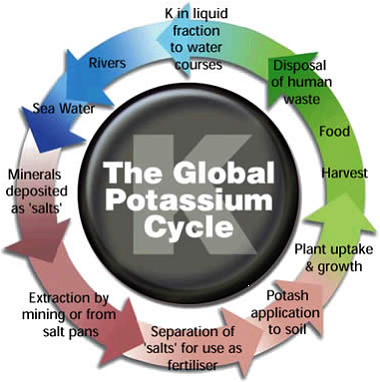
The Global Potash Cycle
Fertiliser potash forms part of a long term global cycle of potassium which is both sustainable and natural as illustrated in the diagram.
Potash Development Association
The PDA is an independent technical organisation providing advice and information to improve understanding and the correct use of potash.
Further Reading
Publications providing additional information about the role of Potash in agriculture, food and the environment.
- Role of Potassium Webinar
- Potassium – a nutrient essential for life (447 kB pdf)
- Understanding Potassium and Its use in Agriculture (2.2 MB pdf)
- Potash and the environment (PDA leaflet 29)
- What you should know about fertilisers (PDA leaflet 25)